
Updated: October 28, 2026
Websites with strong backlink profiles may have an advantage over competitors with fewer backlinks. However, more backlinks don’t always guarantee better rankings or more organic traffic.
A link-building campaign aims to create backlinks to improve the website’s domain authority and build trust with both human visitors and search engine bots.
But there is always a risk involved, as building low-quality, spammy, and manipulative backlinks could negatively affect the rankings. Therefore, be cautious and avoid such risky, low-quality backlink opportunities.
In this blog post, we’ll discuss how you can effectively identify risky websites during link-building campaigns and minimize the risk of a potential ranking drop in algorithm updates.
What are Risky Websites for Link Building?
Websites that violate most search engine spam policies, promote unethical activities, or scam their visitors are usually considered risky websites for link building. These websites may look normal, but an expert analysis could identify the potential risk factors.
Eventually, linking to or getting links from such sites could potentially hurt the overall SEO growth. That’s why it’s important to identify risky websites and avoid linking from them during the link-building campaign.
How to Detect High-Risk Sites During Link Building
Pay close attention to the following signs to identify risky websites and maintain a higher visibility in the SERPs:
Websites Publishing Content Outside Their Niche
A website that publishes articles across various niches fails to stand out in one niche. Publishing articles on marketing, sports, AI, and travelling all on the same website won’t work. Instead, choose a niche and stick to it because authority is built with consistency, accuracy, and uniformity.
Therefore, if you see this pattern on the website you’re looking to get a backlink from, then think twice before doing so.
Here’s an example of such a blog:
This blog publishes content across multiple niches, such as freelancing, blogging, SEO, motivation, AI, startups, technology, and more.
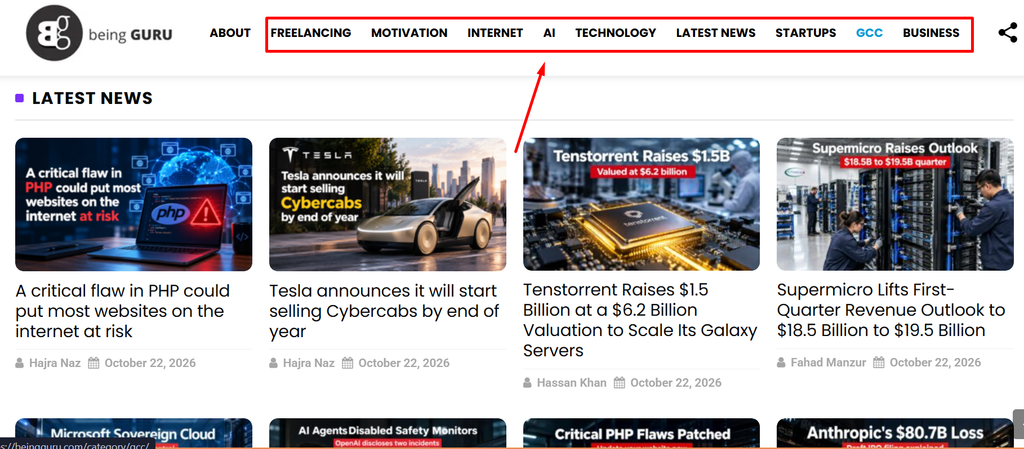
As a result, it gets difficult for search engines to understand the blog’s niche. Therefore, such blogs don’t build topical authority on any topic whatsoever.
The website’s content quality and audience engagement could be phenomenal, but it still may not be a viable opportunity for link building, as they have expanded their content across several niches. Plus, search engines may not see them as an authoritative source of information on one subject.
| Pro tip: It is best to pick a specific niche and stick with it, as publishing multi-niche content stops websites from becoming authority sites. |
Websites Publishing Misleading Content
Some websites share misleading content or invalid information to attract visitors. Their goal is to get attention. Websites with such practices are a red flag and search engines strictly discourage them.
Take a look at this example:
For example, a website might publish outdated statistics as current facts, present unverified claims as established facts, or use figures without citing reliable sources.
So, it’s better to check the website content yourself. This would surely eliminate the risk of getting a link from a website that promotes and shares misleading or unhelpful content.
Declining Overall Traffic Graph
Organic traffic is a huge indicator of a popular website. However, it doesn’t necessarily mean every high-traffic website is worth getting a backlink.
Besides a website’s relevance, there is an important yet ignored red flag that most SEOs tend to forget. It’s the declining traffic graph. There could be so many reasons for the traffic drop. For instance:
- A search engine manually penalized the site
- A recent algorithm update changed the positions in the SERP
- The website stopped publishing fresh content
- The website pages have never been updated in years
- The webmaster accidentally deleted the high-traffic pages
And many more.
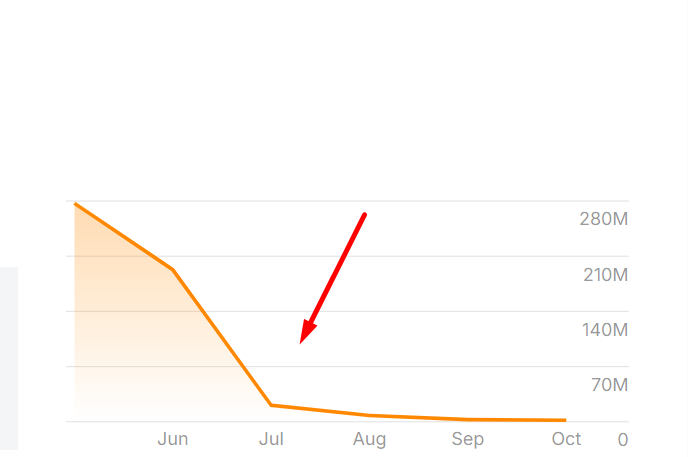
Make sure that the traffic trend on the site you’re getting a backlink from is on an upward trajectory. A backlink from a website that’s experiencing continuous traffic declines could affect your website’s SEO performance as well.
Unnatural Backlink Pattern is Noticeable
Search engines value backlinks that are gained organically. However, an unnatural backlink pattern means the website is manipulating the search engine rankings by building similar backlinks across multiple sites.
Identifying risky websites gets easier if repeated anchor texts appear on several backlinks across different websites. The reason it raises eyebrows is that it may start to look like the website is building excessive backlinks that are over-optimized and using the same commercial anchor texts over and over again.
This unnatural backlinking behavior would immediately appear as a shady backlinking strategy. Therefore, it’s best to let go of these types of link-building opportunities rather than risking your entire SEO campaign.
High Spam Score Detected
Before reaching out to the website owner during the link-building campaign, don’t forget to check the spam score of the website.
Spam score is a 3rd party SEO metric calculated between 0% and 100% that predicts how closely a website resembles sites that have been penalized or banned by Google.
You can easily check spam score of any website through spam score checker, a free online tool. The below screenshot demonstrate its working:

The tool quickly checks the spam score of the provided site and reports the score within seconds. The higher the spam score of a domain, the bigger the risk involved. Usually, SEO experts suggest avoiding websites with a spam score higher than 5%.
So, pay attention to spam score when evaluating websites for link building.
Check the Outbound vs. Inbound link imbalance
Keep an eye on the difference between the outbound and inbound links of a website. If the website has a massive gap between the number of websites it points to and the number of websites that point to it, then it’s a problem. Try any free backlink checker to analyze the link imbalance.
Usually, high-traffic and established websites get a ton of backlinks based on their popularity, rankings, and topical authority; they may have slightly more inbound links than outbound links. So, it won’t be an issue.
However, if a new website with fewer pages and almost no outbound links immediately starts to gain inbound links, then it surely would not look natural.
So, avoid linking-building opportunities on websites that have a huge difference in their outbound and inbound links, as it could harm your website’s reputation too.
Wrapping Up
Most website owners usually don’t understand the technical aspects of link building and get backlinks without any consultation or due diligence. Sometimes, a few bad backlinks could affect the website’s ranking and credibility.
In this blog post, we discussed what risky websites are and how to identify them when building links. The purpose of this blog post is to ensure that you don’t build links on those websites, as this may negatively affect your site’s SEO performance.
Now you may have a comparatively better understanding of what to look out for when running a link-building campaign and what red flags to detect on websites before building backlinks.

Amir Siddiqui is a Digital Marketing Expert and SEO Specialist with over 8 years of experience helping businesses grow through data-driven digital marketing strategies. As the Founder of Web Marlins Pvt. Ltd., his core expertise lies in Search Engine Optimization (SEO), including Technical SEO, Local SEO, AI SEO, and content strategy. He has helped businesses across India, the USA, and the UAE improve search rankings, increase organic traffic, and generate high-quality leads through sustainable, results-focused SEO solutions.